 Options Wheel Trader
What Is the Options Wheel Strategy? A Practical Guide
April 9, 2026
The options wheel is a structured way to generate income and manage stock positions around a core idea: sell cash-secured puts until assignment, then sell covered calls against the shares. It sounds simple on paper. In practice, the edge comes from consistency: tracking premiums, assignments, rolls, and performance across accounts without drowning in spreadsheets.
What the wheel looks like in practice
-
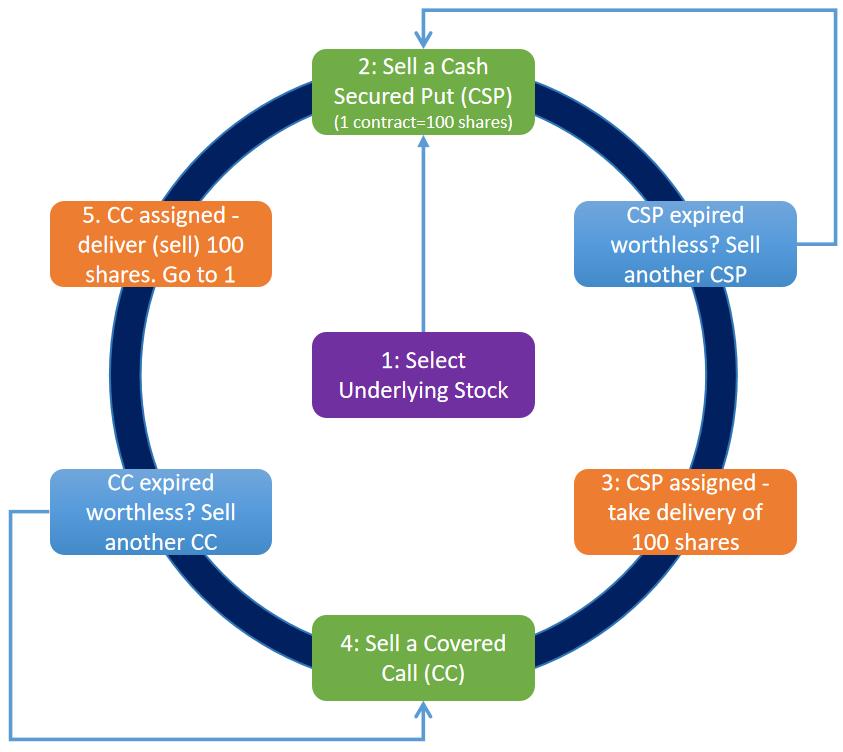
Select an underlying ticker - this is perhaps the most important step in the process. Pick a stock/ETF that you have strong conviction in and that you wouldn't mind owning long term.
-
Sell a cash-secured put - You are selling a PUT - meaning you are willing to take ownership of the stock if the price of the underlying goes below your strike price. Cash secured simply means that you have enough cash in your account to cover the cost of the shares (No of contracts * 100 * Strike Price). For selling the CSP, you collect a Premium.
-
At the expiry date, if the price of the underlying stays above your Strike Price, the CSP expires worthless (you keep the premium). Go back to step 2 and sell another CSP.
-
If assigned, you take delivery of the shares. You now own 100 shares of the underlying.
-
Sell a covered call - You are now selling a CALL - meaning you are willing to sell the shares you just acquired if the price of the underlying goes above your strike price. You will generally set the strike price to a level above your cost basis. A covered call simply means that you own the number of shares of the underlying for which you are selling the call. For selling the CC, you collect a Premium.
-
At the expiry date, if the price of the underlying stays below your Strike Price, the CC expires worthless (you keep the premium and the underlying shares). Go back to step 4 and sell another CC.
-
If assigned, you deliver (sell) the shares of the underlying at your strike price.
-
You can now choose to go back to step 1 (select a new underlying) or step 2 (use the same underlying) and repeat the process
The loop rewards patience and clear record keeping. The enemy is poor underlying selection, guessing your cost basis after assignment or a roll or forgetting which position belongs to which account.
Where traders usually break down
Without a dedicated system, you end up with:
- Fragmented history across broker spreadsheets and notes.
- Slow answers to basic questions: total cash tied up in puts, win rate on a ticker, or whether a roll actually improved your economics.
- Error-prone math when premiums, fees, and assignments stack over months.
How Options Wheel Trader supports the wheel
Options Wheel Trader is built to mirror how wheel traders actually work: log trades, see portfolio and holdings, and use reports to understand performance instead of reconstructing it by hand.
For trade discovery, you can also use the scanner workflow explained in How the Options Scanner Works.
Keep the full picture in one place
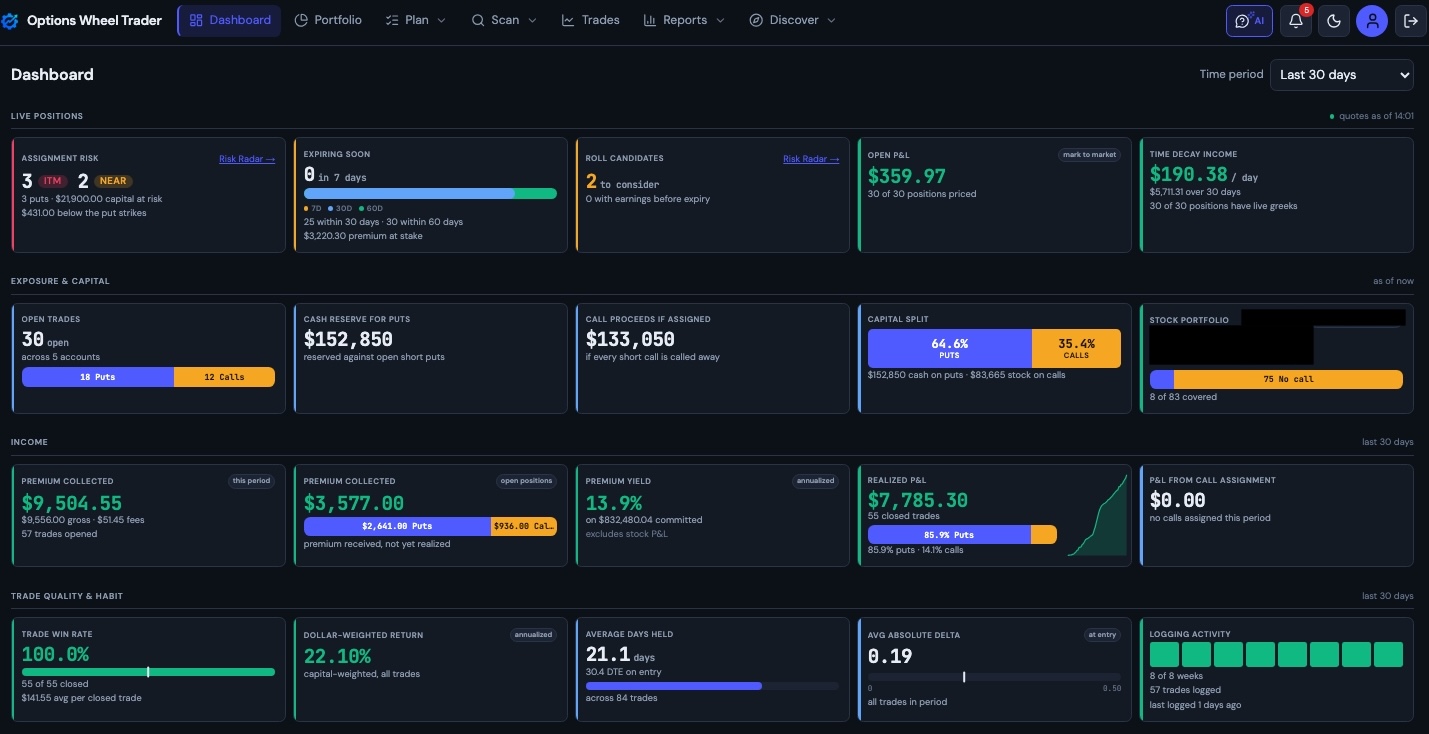
The dashboard gives you a consolidated view of where you stand so you are not tab-hopping between spreadsheets.
Log puts, calls, assignments, and rolls
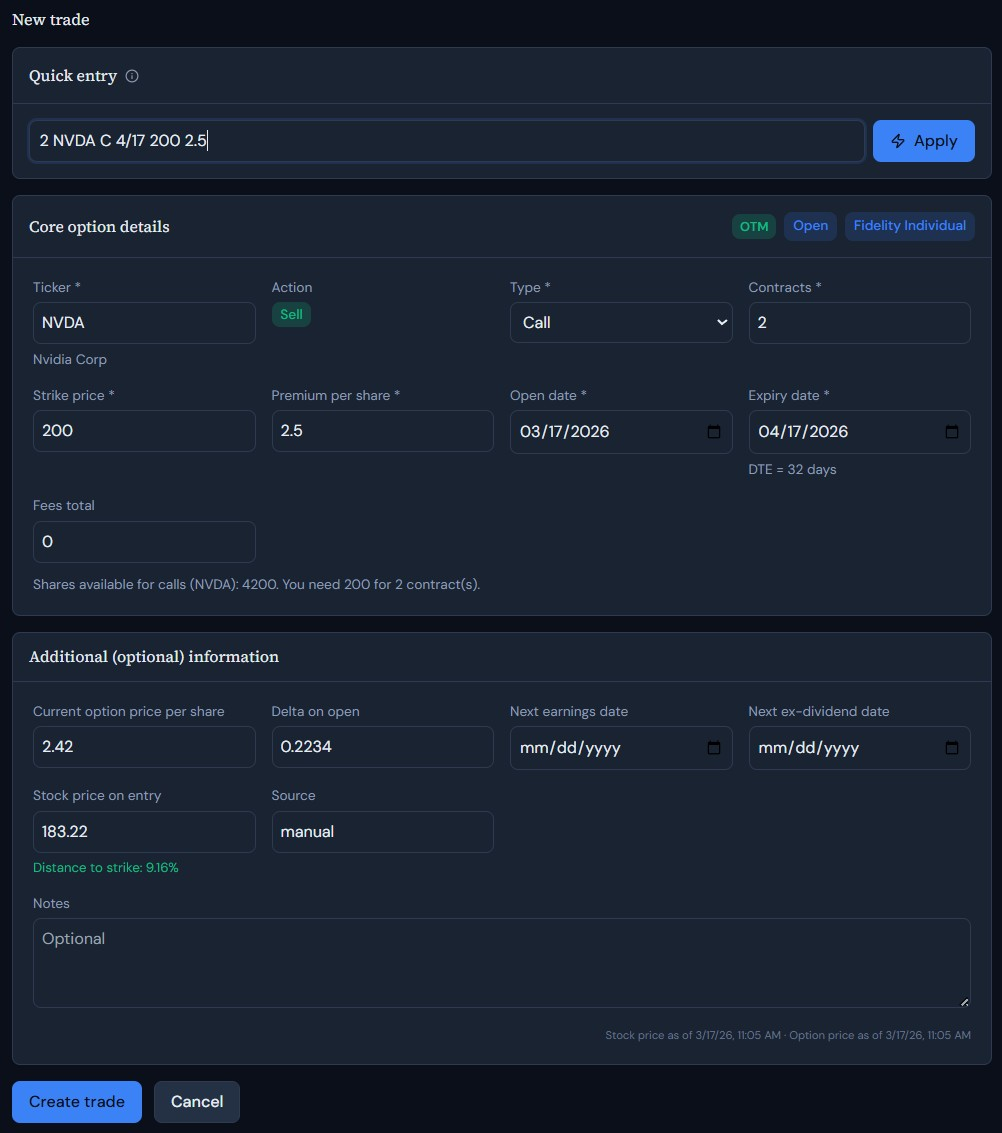
When you open or adjust a position, the flow is designed for wheel workflows: puts, covered calls, assignments, and rolls without rebuilding the sheet every weekend.
Understand premium and income over time
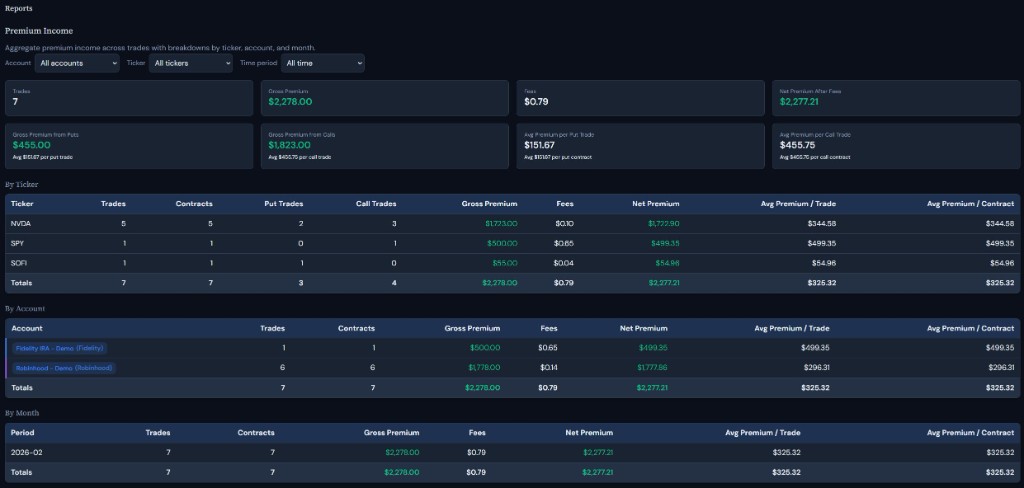
The wheel is an income strategy as much as a directional one. Seeing premium collected in context helps you judge whether your cadence matches your goals.
Use analytics to improve decisions
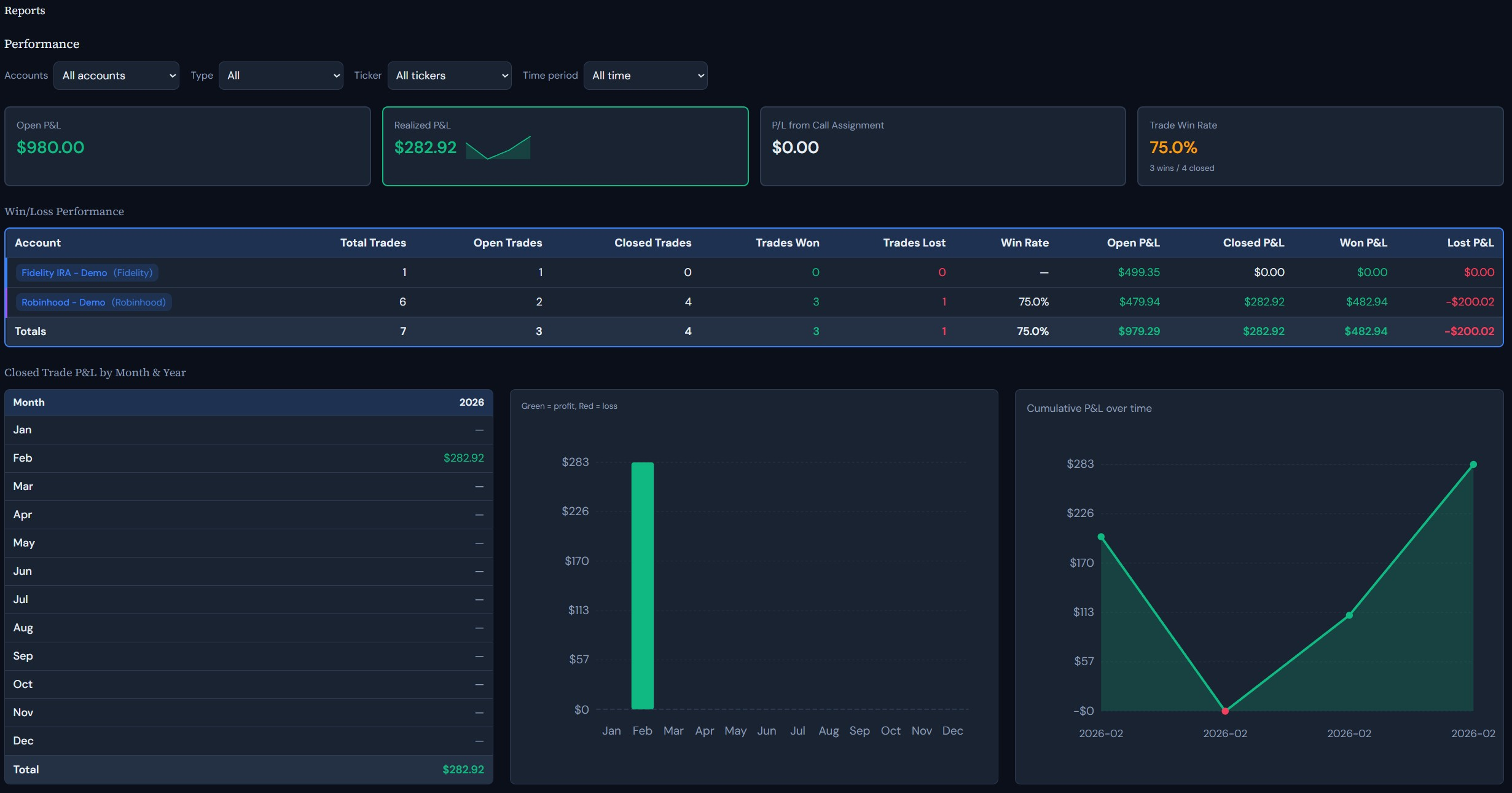
Good traders review their outcomes. Performance reports turn your logged history into summaries you can act on - what worked, what did not, and where your time was best spent.
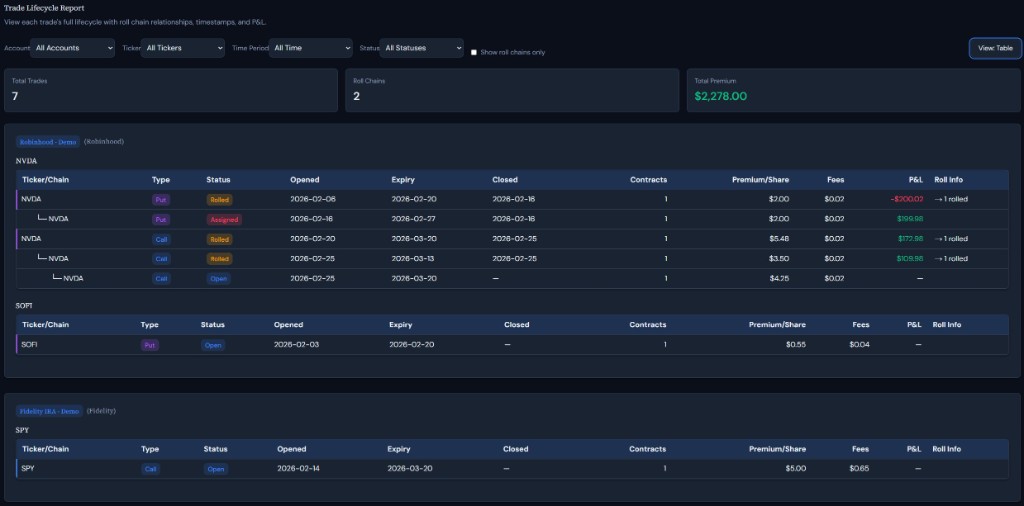
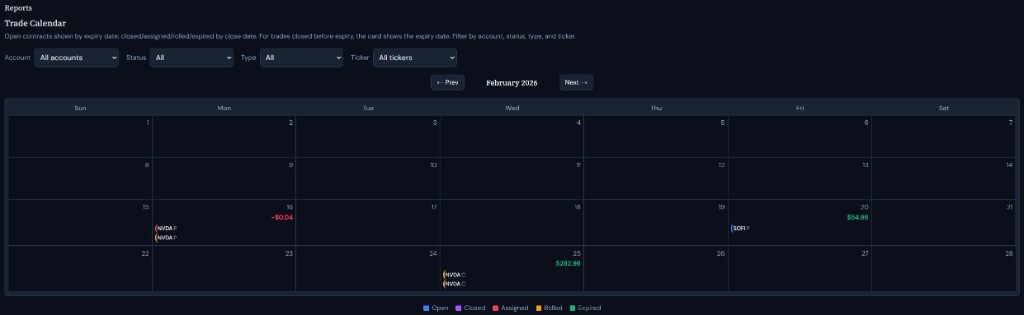
See lifecycle and calendar context
Rolls and expirations are easier when you can see what is coming and how positions evolved over time.
Discipline beats perfect setups
The wheel rewards process: defined strikes and expiries, trade sizing, consistent risk management, and honest review. A tool cannot replace judgment, but it can remove friction from tracking so your energy goes to decisions, not data entry.
If you are ready to run the wheel with clearer records and better analytics, Options Wheel Trader is built to help you get there—starting with a straightforward log of what you actually did, and reports that show what it meant.
Ready to Track Your Options Trades?
Get started with OptionsWheelTrader for free
This article is educational and not investment advice. Options involve risk; read our Terms and consult a professional as needed.